- info@valdorart.com

Learning to Draw in Two Ways: Strategy or Instinct?
Friday, September 05, 2025
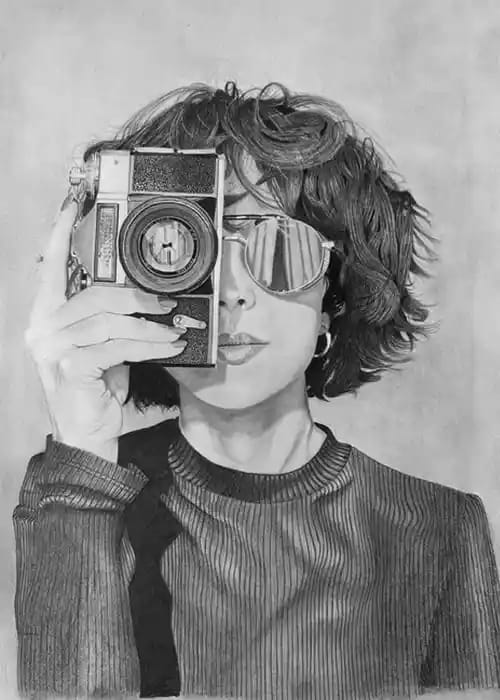
Creativity is not a one-dimensional phenomenon; it consists of two distinct yet complementary approaches: operational and intuitive creativity. While these concepts are often linked to innovation and technological development, they are also fundamental in learning to draw.
If you truly want to develop your drawing skills, you need to use both types of creativity. Let’s explore how these processes work in the world of drawing!
Operational Creativity: The Role of Logic and Structure in Learning to Draw
Operational creativity relies on existing knowledge, logic, and structured approaches. It is one of the pillars of learning to draw!
- System and technique: Perspective, proportions, shading, and composition are all elements of operational creativity. These are the technical foundations we learn, practice, and apply to create realistic and impactful drawings.
- Conscious observation: A good drawing starts with careful observation and analysis of shapes, details, and relationships. Operational creativity helps break down the drawing process into logical steps, making it easier to apply techniques effectively.
- Practice and problem-solving: Identifying mistakes and improving them, as well as overcoming drawing challenges, all require operational thinking.
For example, when drawing a portrait, operational creativity guides you through the correct proportions, shading techniques, and methods to ensure an accurate and well-structured result.
Intuitive Creativity: The Power of Instinct and Spontaneity
Intuitive creativity is the opposite of operational thinking. It relies less on existing knowledge and more on inner instincts, emotions, and subconscious expression. This type of creativity is essential for artistic expression!
- Free association: When drawing, you often let your hand move freely, following your emotions. Not everything needs to be perfectly planned—some of the most expressive artworks come from instinctive decisions.
- Mood and emotional expression: A drawing becomes powerful when it conveys emotions. Intuitive creativity allows you to go beyond technical rules and let your feelings shape the lines and shadows.
-Courage and spontaneity: The intuitive approach encourages you to experiment without fear, to try new techniques, and to embrace unexpected results.
Think of an artist sketching a scene freely, letting their pencil move instinctively across the page—this is intuitive creativity in action.
Where Do These Two Approaches Meet in Learning to Draw?
True artistic growth happens when operational and intuitive creativity are in balance. Learning to draw starts with operational creativity—understanding the techniques, methods, and structure. But if you only follow technical rules, your drawings may be perfect but lifeless.
On the other hand, if you rely solely on intuitive creativity, you might have great ideas but struggle to bring them to life effectively on paper.
The best drawings combine both operational and intuitive creativity:
🎨 Operational creativity teaches you how to draw correctly.
🎨 Intuitive creativity helps you bring uniqueness and expression to your art.
For example, when drawing a portrait, operational creativity ensures correct proportions, while intuitive creativity brings life to the character through subtle details, expressions, and emotions.
Creativity Can Be Developed!
Both operational and intuitive creativity can be strengthened—and learning to draw is a perfect way to practice them.
🎯 Operational creativity improves through structured exercises, conscious observation, and mastering drawing techniques.
💡 Intuitive creativity grows when you allow yourself to create freely, experiment, and trust your instincts.
Drawing is one of the purest forms of creation, where structured learning and spontaneous expression work together. By developing both types of creative thinking, your drawings will not only become more skilled but also more expressive and unique!
Which Creative Type Are You?
Do you prefer a structured, logical approach and enjoy following technical steps?
Or do you rely more on your instincts and emotions when creating?
Maybe you see yourself in both?
No matter your creative type, drawing helps unlock both operational and intuitive creativity—and we’re here to guide you on that journey!
Start learning to draw with us and experience the true freedom of creation! 🎨✨
Credo
You're capable of more than you think.